


31 July 2026 - Peter Mackay at 100
Reflections on Archives, Place and Connection
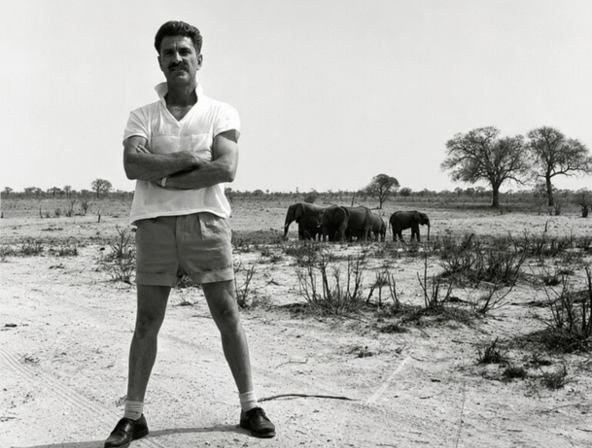
Peter Mackay, 31 July 1926 - 17 April 2013 (©Mackay Archive, University of Stirling)
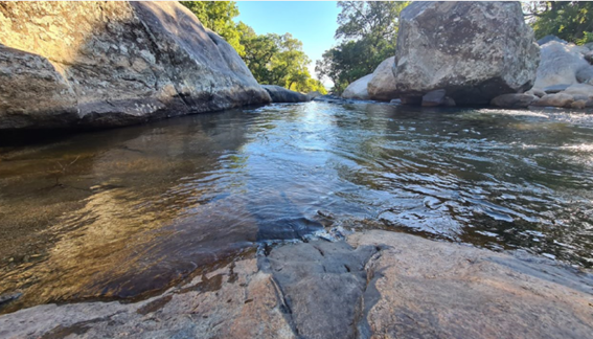
Five years ago, on 31st July 2021, I sat on a boulder in the middle of the Water of Ruchill, which runs through Glenartney, in the Perthshire Scottish Highlands. The river was exceptionally low. There had not been much rain in the preceding weeks, and across Scotland, rivers and loch beds lay exposed, revealing crannogs, roads, and entire villages that had been lost to history. Here at Glenartney, it was no different. Among the sun-bleached rock, only thread veins of water persisted.
That day would have been Peter Mackay's ninety-fifth birthday. Had Peter accepted the invitation from his close friend, Baroness Willoughby of Drummond and Grimsthorpe, to retire on her Glenartney estate, I may well have come across him sitting on that very boulder among the rivulets, contemplating, with his photographer's eye, the juxtaposition of the dry riverbed and the verdant glen.
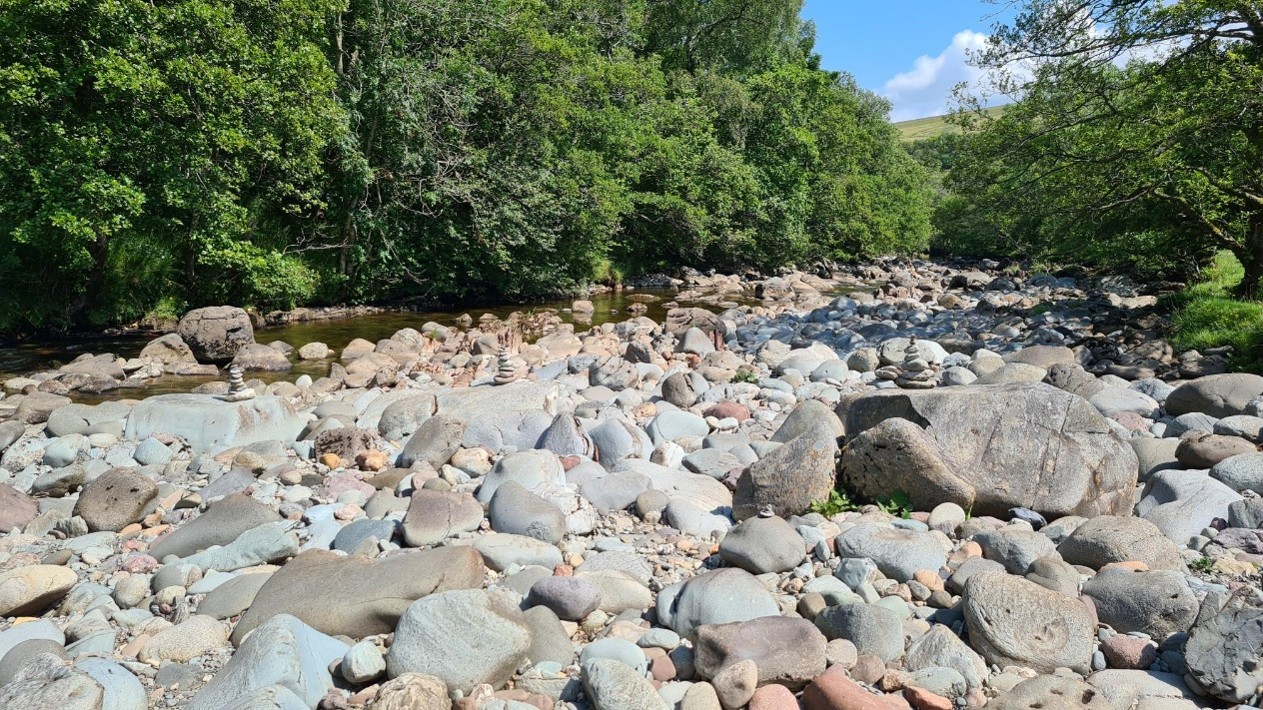
Water of Ruchill, Glenartney, Scotland, 2021 (©Janine Mitchell)
We had only just regained partial freedom from lockdown, and so I wanted to reconnect with my doctoral project. By then, I had spent two years immersed in biographical research in the Peter Mackay Archive at the University of Stirling. My days were filled with Peter's journals, correspondence, notebooks, photographs, newspaper cuttings and personal papers. I had become familiar with the rhythm of his writing, his linguistic quirks and the meticulous care with which he documented his remarkable life. There were moments when I felt I could tell, from the mere slant of his handwriting, whether he was tired or energised, unwell or irritable. Alongside the archive, I had undertaken an extensive oral history project, interviewing Peter's family, friends and colleagues in Scotland, across the UK and in Africa. Those conversations added warmth and texture to the documentary record, revealing a Peter who was at once intensely private, quietly humorous, deeply loyal and endlessly fascinating.
Immersion had become central to my research, but looking back I realise it had also become something far more personal. Like many researchers, I began with the theory that understanding comes through gathering evidence: another letter, another interview, another photograph, another notebook. Yet what I could not have anticipated was that the archive would become something more than a collection of documents. Gradually, almost imperceptibly, it became the beginning of an enduring relationship.
Peter ceased to be simply the subject of my research. Certain phrases became familiar. Particular habits emerged. Seemingly insignificant observations, scattered across decades of correspondence, began to speak to one another and connect. The oral histories reinforced these impressions, revealing not simply the public figure remembered as a soldier, journalist or political activist, but the man whose kindness, loyalty and unwavering moral conviction had left such a profound impression on those who knew him.
It was perhaps inevitable that I began to wonder whether even the richest archive could answer every question I carried. Archives preserve words, photographs and memories with extraordinary care. Still, they cannot preserve the sensation of standing where someone once stood, listening to the wind they once heard or watching weather move across a landscape that shaped their life. Those experiences belong to place.
For Peter, one such place was Glenartney.
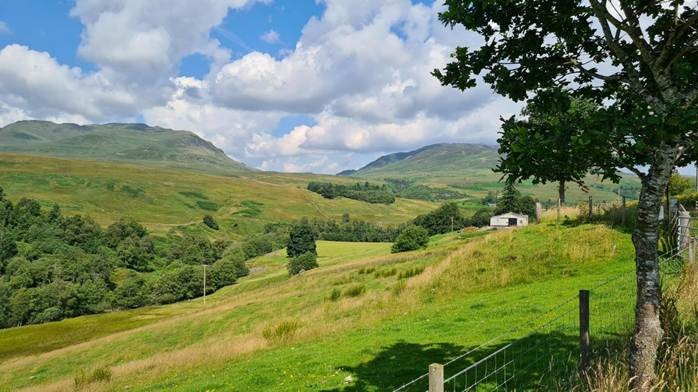
Glenartney, Scotland, 2021 (©Janine Mitchell)
Today, as we celebrate Peter Mackay's 100th birthday, I find myself returning to that afternoon in the glen.
At the time, I could not have explained why it felt so significant. I had travelled there hoping simply to spend time in one of Peter's favourite places. Looking back now, I realise I was standing at the beginning of a journey that would fundamentally change the way I thought about archives, place, writing and, ultimately, Peter himself.
Long before Peter found solace in Glenartney, Sir Walter Scott immortalised the glen in The Lady of the Lake, capturing its wildness, its ‘hazel shade’ and its enduring power.
Peter sought refuge in that same glen throughout his life, usually after periods of profound upheaval: following his detention, after learning that his family had disowned him and, later, when threatened with re-imprisonment and exile. After two years of upheaval in my own life, the Covid-19 pandemic, separation from my research material, poor health and bereavement, Glenartney became my own place of reconnection.
I was only twenty miles from home, yet I might as well have been hundreds of miles away. There was no mobile signal. A thunderstorm that had threatened for two days finally broke across the glen, taking the electricity with it and disconnecting me entirely from the outside world. Surrounded by creaking juniper and hazel woodland, bracken-filled valleys and the slow movement of sheep across the hillsides, there was little to do but walk, sit quietly and listen.
And it was there, unexpectedly, when I was totally cut off, that I felt it.
Connection.
Not simply to Glenartney, but to something deep within, and to Peter.
Looking back now, I realise that it was in Glenartney that I first understood Richard Slotkin's observation that, to write another life, we must find within ourselves that which ‘might correspond to an historically other consciousness.’ Peter's experiences had not become mine, nor could they ever. Yet we had both climbed those hills, listened to the waters, watched the storms gather over the glen and found, in that landscape, a place of retreat and reflection. Those shared human experiences became a bridge between us.
That evening, I sat alone in the darkened cottage while thunder rolled steadily across the hills. I found myself recalling the founder of Camfed, Ann Cotton's, description of Peter descending, saint-like, from the hills above Nyaminyami, on the banks of Lake Kariba, his arms outstretched in welcome, the sun behind him, his white hair glowing like a halo. The image stayed with me as lightning flashed beyond the window, leaving behind it an overwhelming sadness that I had never met Peter in person. I had spent years with his letters, journals and photographs. I knew him through the recollections of family, friends and colleagues. Yet there remained an absence that none of those remarkable sources could fill. There was no recording of his voice. No moving image. No opportunity to observe his gestures or hear his laughter.
It was then that I understood this exercise in immersion, this desperate need to possess and be possessed by Peter Mackay, would require something more than archival research.
Kevin Barry, reflecting on his own journey while reimagining John Lennon’s life in Beatlebone, observes that when we are geographically isolated and physically cut off from the rest of the world, ‘there's no place to go but deep inside.’ Those words resonated in ways I could never have anticipated. My thoughts, like the swallows wheeling outside the cottage window, seemed at first to whirl and shriek before gradually settling. Then, like the eye of the storm, a calm descended. The further inward I travelled, the clearer Peter’s voice became.
During one of my earliest interviews, I asked Peter's nephew, Rupert Connell, to describe his uncle's voice. He smiled before replying, ‘Imagine, if you can, Peter O'Toole reciting Shakespeare.’ That was easy. A quick search on YouTube gave me the answer I was looking for. Only it didn’t.
Later, still searching, I repeated Rupert's description to Peter's friend and lawyer, David Ross.
‘Yes,’ he replied thoughtfully, ‘I suppose that’s a good starting point. But Mackay’s voice was deeper. More leonine. More sonorous. When he spoke, you felt it resonate through your entire body. It commanded attention. Even in his final weeks as he lay in bed, weak and dying from cancer, his stock phrase “I’m fine” could make you sit bolt upright and send a chill down your spine.’
‘I’m fine.’ I wrote those two words over and over in my notebook, all the while recalling Kevin Barry’s words that ‘we don't write or draw or make music because we're fine... we do it because life is meaningless, cruel, often disastrous and ridiculous and there's no shape to it. That's why we make art, as an attempt to put meaning and shape to our lives.’
Those words came to define my own journey with Peter. My biographical novel, Freedom Road, was never simply an attempt to retell his life. It became my way of making sense of years spent living alongside Peter through the archive; of understanding not only his losses and regrets but our shared experiences of place, dedication, love, loss, grief and isolation.
Sensory memories of Peter’s time at Glenartney – the hue and flavour of the air, the howl and whip of the wind across the glen, the way the floorboards creaked, or the bed springs may have sagged under him, too, as he lay awake, restless and pondering were no longer out of my reach. Here was a way for me to connect with him that did not require books, research, or interviews. This could be our common space. After all, we had both climbed that precariously railed staircase. We had both looked from the bedroom window over the landscape. We had both weathered the glen’s storm. This shared, physical, human experience drew me closer to him in a way that none of my previous research had.
I had been fastidious, rigorous to the point of obsession with anchoring my work to Mackay’s archive and the years of interviews and research I had conducted to build as complete a documentary record as possible. Suddenly, I felt delightfully untethered. Free.
Here was the voice I had been searching for. Here was the warm, soft flesh on the bones of my research. Here was the breath in its lungs.
The journey that began in Glenartney would eventually take me to Malawi, to Mount Mulanje and the Likhubula River where Peter spent some of the happiest and most devastating years of his life. Three thousand feet above the Likhubula Valley, I read a framed newspaper article that hangs on the wall of France’s Cottage on the Chambe Plateau. In it, Laurens van der Post’s daughter describes her father’s time on Mount Mulanje as a two-fold journey: one into the mountain itself and another into his own mind and spirit. The mountain – like life and truth – has many facets. Like humans, it is complex, full of secrets, overwhelming, dangerous, tranquil, terrifying and a privilege to discover. Writing its story requires deep introspection, commitment, immersion and full engagement.
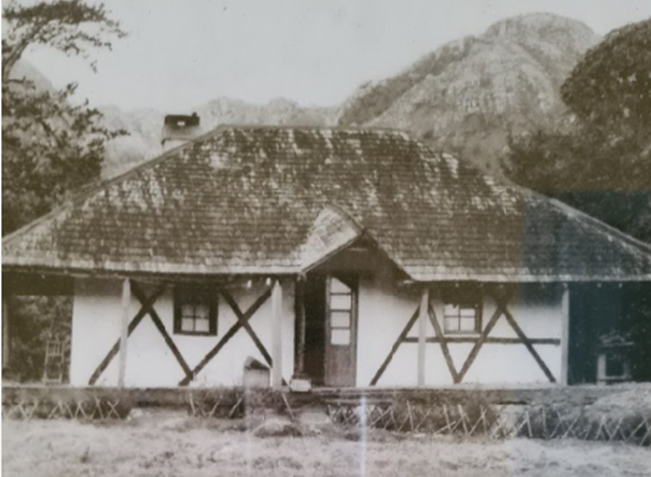
France's Cottage, 1960 (©Frances Cottage, Chambe Plateau)
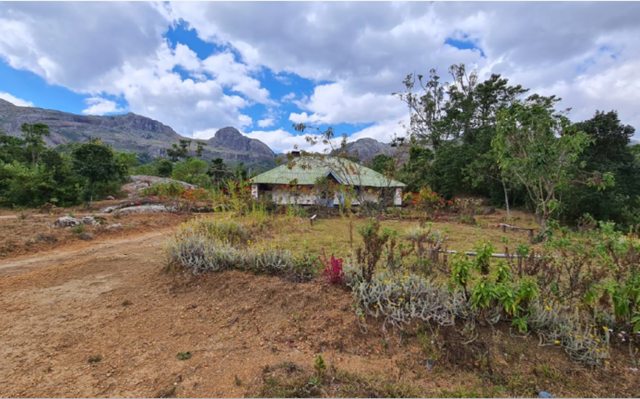
France's Cottage, 2023 (©Janine Mitchell)
Standing there after the same demanding ascent to seclusion, space, the endless views across the valley, I understood exactly what van der Post meant. The physical isolation on the mountain, much like Kevin Barry's experience while researching Beatlebone, leaves nowhere to go but inward. The deeper I travelled into the landscape, the more I found myself reflecting not only on Peter's experiences but on the nature of immersion itself.
Returning to the valley, I spoke with members of the community who had known Peter, still remembered locally as ‘The Soldier’, and whose recollections of his time there breathed more life and warmth into the documentary record.
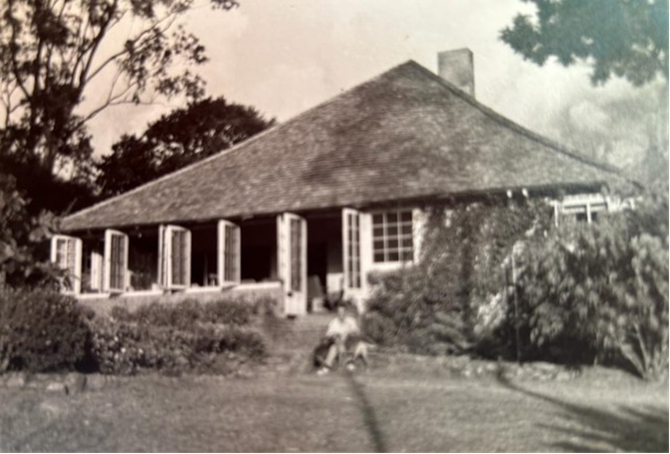
Peter on the steps of Mulanje Lodge, 1960 (©Jimmy Skinner Files)
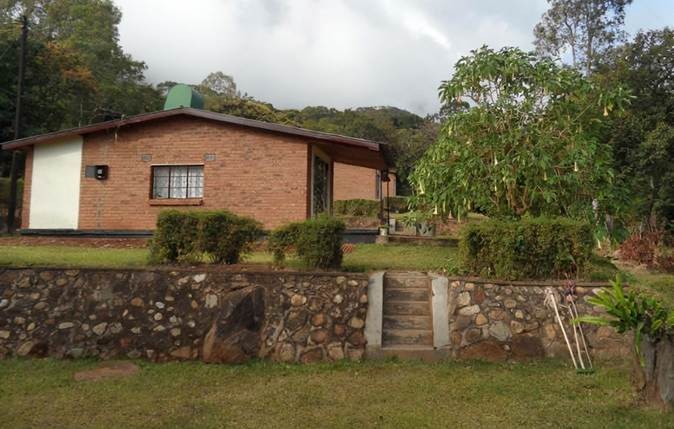
Mulanje Lodge now CCAP Likhubula House, 2023 (©Janine Mitchell)
Later, I sat beside the Likhubula River at the very place where Peter had fought so desperately to save his dear friend and colleague, Sketchley Samkange, from drowning. There I revised the chapter describing Sketchley’s death, allowing Mackay's recollections, the physical landscape and my own experience of loss, grief and place to merge. At that moment I understood that immersion was not simply about walking where Peter had walked. It was about discovering those shared human experiences that allow us to bridge the inevitable gaps left by history and the archive.
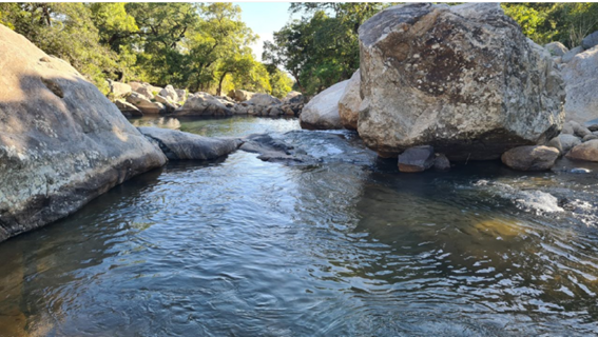
Likhubula River Pools, 2023 (©Janine Mitchell)
Likhubula River Pools, 2023 (©Janine Mitchell)
A few weeks ago, I returned to the Water of Ruchill.
The river flowed gently through the glen, its banks glowed pink with rosebay willowherb in full bloom and the hills were flecked with sheep. Swallows skimmed low across the water before climbing into the warm summer air. At first glance, very little had changed.
Yet everything had.
Walking again through the glen, I realised that the connection I had felt on Peter's ninety-fifth birthday had not belonged solely to that place. It had begun years earlier, the first time I opened one of his archive boxes, and had deepened with every letter, every interview, every landscape, every place, every conversation, every experience.
Today, on the centenary of his birth on 31st July 1926, Peter Mackay continues to do what he did throughout his life: bring people together. Through the remarkable archive he entrusted to the University of Stirling, through the memories shared by those who knew him, and through the places that continue to bear witness to his story, new connections continue to be made.
When I think of Peter now, I no longer picture him first in an archive or a photograph. Instead, I find myself back on that boulder in the Water of Ruchill, listening to the river moving quietly through the glen. Back on the Chapaluka Path to Chambe Plateau. Back among the people of Likhubula. Back on the rock where Sketchley lay. It was there that I truly understood that the most enduring legacies are not built solely through the events of a life, but through the connections that continue long after a life has ended.
And therein lies the true gift of archives.
They allow conversations to continue long after voices have fallen silent. They reveal our shared human experience across space and time. They connect us to the past, to people, to place, and to ourselves.
Ultimately, archives preserve far more than documents. They preserve the possibility of encounter.
An extended version of this article will be published in an upcoming issue of The Society of Malawi Journal.
29 March 2020
Two months ago, I glossed over this entry, dated 29 March, in Peter Mackay’s journals:

29/3 My cold consumes three rolls of 'sublimely soft toilet tissue' in two days.
That week, Mackay had been bedridden with what today might be described as ‘man-flu’. In comparison with his usual prolific writing style, the week’s entries are sporadic one-liners reflective of his state of health and his mood. This entry, in particular, held no value for me two months ago. Today, its value is much more significant. Two months ago, we could not have imagined a global obsession with ‘toilet tissue’: supermarket shelves stripped bare; queues of panicked buyers all desperate to get their hands on a 9-pack of Luxury Soft. How carefully we now conserve that precious commodity and how many of us today would contemplate wasting 'three rolls of sublimely soft toilet tissue’ on our noses?!
I have been very fortunate in the course of my PhD research to work with some incredible collections of personal diaries, including Mackay’s journals held in the University of Stirling Archives and the journals of John Reed held at Chetham’s library. Personal diaries add flesh and blood to the skeleton that is the ‘official’ record of events enabling researchers to reconstruct the daily lives of ordinary people living through extraordinary times.
Staff at the University of Stirling Archives have asked us all to keep a daily diary to document the Coronavirus pandemic for future generations. You may think that your day has been mundane; that what you ate for tea, the games you played, your emotions, your financial situation, where you lived, how you shopped, when you exercised, how you grieved loss or celebrated birthdays, weddings and anniversaries is of no interest. But you cannot possibly predict what will interest future generations of researchers, just as we could not have predicted our current situation.
Of all the entries in Mackay’s journals, I am sure this is the last one he would have expected to be of interest to a future researcher, and yet, today, it is.
For more information about the Coronavirus diary project, visit the University of Stirling Archives website.
